
TIPS FOR CABLE

What should you consider when speaker cables

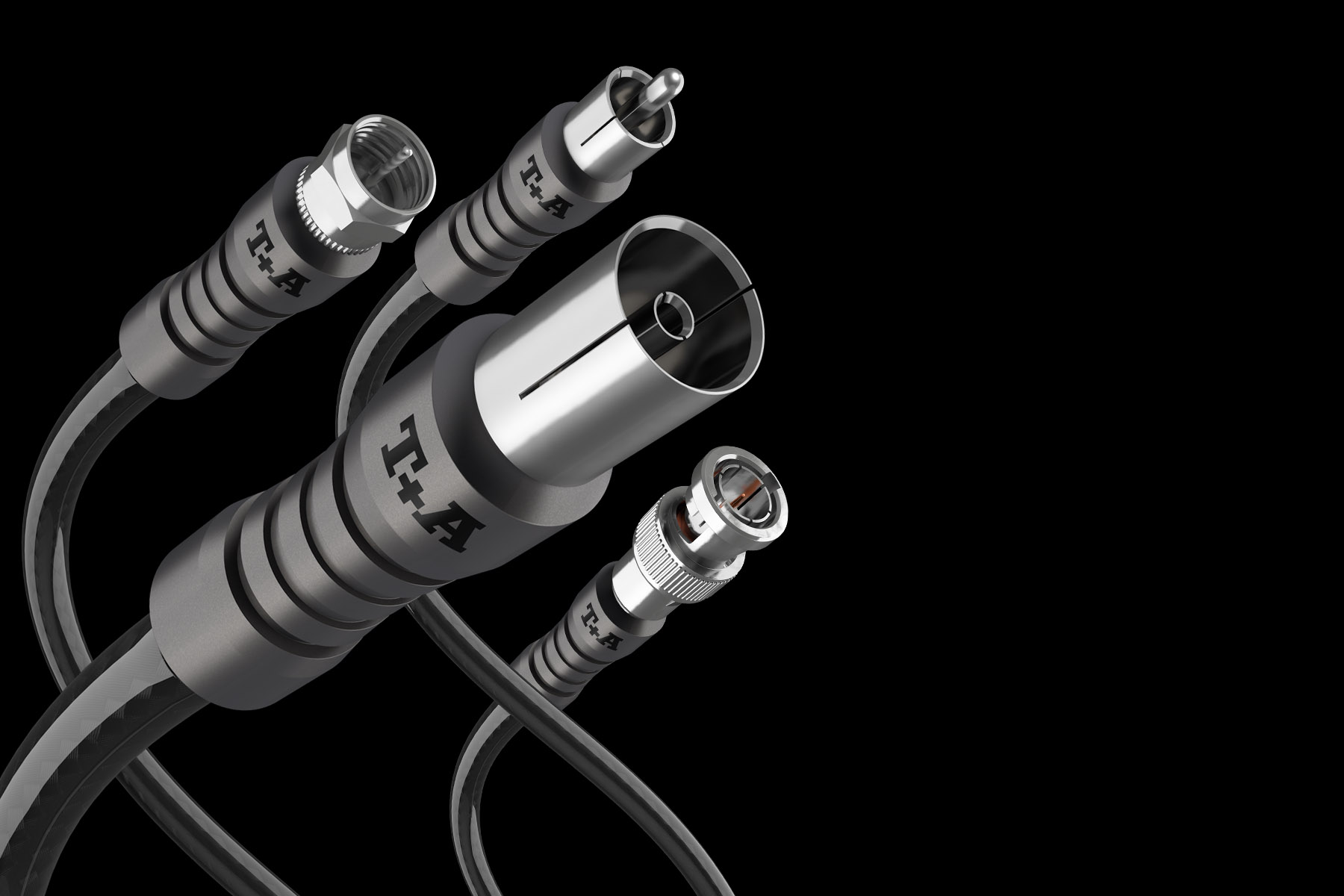
The cables do have a marked influence on the overall sound quality of a system, and their effect should not be under-estimated. At  T+A we always recommend the use of high-quality cables for connecting the loudspeakers. T+A has developed its own range of cables specifically for this application, and it includes suitable types for every purpose. Our cables are matched to the special characteristics of our loudspeakers.


General advice

  • The highest quality version is T+A Speaker Koax cable. This is a cable of co-axial construction with an inner conductor and two insulated woven braid jackets, one inside the other.
  • This cable excels in its exemplary damping characteristics and extremely low inductivity. Its outstanding technical parameters and robust mechanical construction produce an explosive, highly impressive sound quality, with excellent attack, bass pressure and mid-range presence.
  • T+A Speaker Six cable consists of 6 stranded wires wound firmly round a polyurethane core. Three wires, located in opposition to each other, are wired to each channel. Two of the three strands consist of copper / silver wires, and the third is of copper.
  • The unique physical arrangement of this cable endows it with excellent damping characteristics and low resistance. As a result it is a particularly good choice for long lengths of cable (up to 15 m). It is easy to configure, and suitable for all speakers. In sonic terms this cable offers impressive agility, liveliness and clarity, together with a broad range of sound colours.
  • We developed the Speaker Twin 2 cable to meet the need for a classic twin-core cable of ultra-low resistance. Each of the two conductors consists of 7 multi-strand wires, each containing 18 separate strands of wire. Three of these stranded wires consist of copper / silver, the remainder of copper. The conductors are twisted together extremely tightly in order to avoid problems with mechanical oscillation.
  • The low resistance of this cable makes it a better choice for fairly long connections (5 m or more). In sound terms it produces a very high-pressure bass, together with clear, detailed mids and highs.
  • Our Speaker Flat cable, on the other hand, was developed to solve a particular problem, i.e. cable bulk. The stranded copper and copper / silver wires are rolled flat, making it possible to deploy the cable neatly under the carpet, under steps and in low-profile cable ducts.
  • This cable's very high-quality insulation gives it good damping characteristics and excellent frequency stability. The low-profile cross-section of the cable makes it a particularly good choice for surround system wiring.


Using loudspeaker cables

The way cables are deployed and handled can also exert a powerful influence on the sound of the system. There are a number of basic rules which should be considered in this respect:

  • Best possible quality can only be achieved when the cables to the right and left speakers are of equal length.
  • Speaker cables should not be kinked or squashed. If the cable has to cross a doorway we recommend using a cable duct; don't just jam the cable in the door.
  • Rolling up overlength cables is not recommended. It is better to lay out excessive cable length in a meandering to-and-fro pattern. Co-axial cable is of quite different construction, and because of this it can safely be coiled without any adverse effect on sound quality.
  • As a general rule speaker cables should not be deployed in the vicinity of LF cables (inter-connects), as this could result in cross-talk problems. Take particular care in this respect with any phono (vinyl disc player) cables, as they are especially sensitive.
  • If you intend to bi-wire your speakers, note that the same cable should be used for all the frequency ranges.
  • The cables in the T+A range are very highly specified, and are suitable for the entire frequency range. If you are a listener who prefers a light, fast, and very precise sound with a dry bass, we recommend the use of Speaker Koax cable.
  • If you prefer a slightly softer balance with less presence and a warm bass, we recommend Speaker Six cable.